
How healthcare websites build trust and drive patient signups
Healthcare websites must balance trust-building with conversion optimization to transform the 77% of patients who search online into actual appointments.
- Display trust signals prominently – Certifications, patient testimonials, and detailed doctor bios increase credibility and can boost conversion rates by up to 20%
- Prioritize mobile-first design – With 60% of healthcare searches on mobile devices, fast-loading responsive sites are essential for patient retention
- Create low-commitment entry points – Health assessments, educational webinars, and downloadable guides capture leads before patients are ready to book appointments
- Use data to personalize experiences – A/B testing, behavior tracking, and CRM integration help optimize conversion paths based on actual patient interactions
- Implement multiple conversion touchpoints – Exit-intent popups, live chat, and retargeting strategies provide multiple opportunities to engage visitors throughout their decision journey
The most successful healthcare websites don’t just inform—they guide stressed patients through a thoughtful digital journey that builds confidence and makes scheduling that first appointment feel like a natural next step.
People make about 1 billion health-related searches on Google every day. The search engine serves as the first touchpoint for 77% of all healthcare users. The digital world makes healthcare website optimization more important than ever.
Trust building plays a vital role in medical website design. Research shows that trust signals boost conversion rates up to 20%. Medical websites need to strike the right balance between looking professional and being easy to use. This becomes even more crucial since 64% of adults look up health information online.
This piece shows how the right website design can improve visitor experience and boost results. A healthcare practice saw its appointment requests jump 48% in just nine months after adding patient-focused features. The Center for Reproductive and Genetic Health also achieved remarkable results. Their strategic website improvements led to a 50% higher conversion rate.
Let’s get into what makes healthcare websites truly work. These elements help turn visitors into patients. Most people need multiple visits before booking an appointment. A well-planned conversion path becomes the foundation of success.
Why is trust the most important factor on healthcare websites?
Trust is critical on healthcare websites because patients are often stressed, uncertain, and making high-stakes decisions. Clear credentials, real provider information, and transparent communication reduce anxiety and make taking the next step feel safe.
Building trust through design and content
What trust signals increase conversions on healthcare websites?
The most effective trust signals include medical certifications, accreditations, patient testimonials, detailed doctor bios, and real success stories. These elements can increase patient confidence and improve signup rates by up to 20%.
Trust is the foundation of healthcare relationships. Website design influences 75% of visitors’ judgment about a brand’s credibility. Healthcare websites need several trust elements to work well.
Use of certifications and accreditations
Healthcare organizations gain instant credibility by displaying relevant endorsements and certifications. Professional credentials like board certifications, medical licenses, and third-party accreditation badges show your steadfast dedication to quality standards. Your practice’s affiliations with respected organizations and industry recognitions prove you meet quality standards of excellence.
Patient testimonials and reviews
Research shows 91% of people trust online reviews as much as personal recommendations. Healthcare providers must guide through strict regulations about sharing patient experiences. Restrictions apply to testimonials about clinical outcomes. Comments about service quality, communication style, and facility environment remain acceptable. The Journal of Health Communication published a study that showed providers who shared patient stories saw a 30% rise in trust ratings.
Highlighting successful outcomes
Success stories add a human touch to healthcare by showing compassion and expertise. The Cleveland Clinic makes use of “Stories of Care” initiatives. Caregivers share positive patient experiences that encourage empathy and improve satisfaction. Case studies with positive outcomes help future patients picture their own path to recovery. These stories create emotional bonds and strengthen confidence in your services.
Doctor bios and human stories
Doctor profiles should go beyond simple qualifications. A compelling provider bio includes:
- Professional credentials and specializations
- Personal motivations for choosing their medical field
- Interests and family information that show the human side
- Real photos of your actual team (not stock images)
Yes, it is true that 61% of consumers search online for care, which makes engaging provider bios crucial. Patients want to learn about credentials and communication style. Personal details that reveal providers as real people matter too.
Creating a seamless user experience
Why is mobile-first design essential for healthcare websites?
Mobile-first design is essential because over 60% of healthcare searches happen on mobile devices. Fast-loading, responsive layouts help patients find information quickly and prevent drop-offs during urgent or emotional moments.
Patient conversion depends heavily on smooth digital experiences. Research shows 53% of mobile users leave healthcare sites when they take more than three seconds to load. A user-friendly online environment needs several important elements.
Mobile-first healthcare website design
Healthcare searches from mobile devices now exceed 60%, making smartphone design essential. The mobile-first approach puts smartphone users first and then adapts the design for bigger screens. This method brings several advantages:
- Patients can navigate easily when looking for quick information on the go
- Google’s mobile-first indexing improves search visibility
- Touch-friendly interfaces and simple forms lead to better conversion rates
The site should also have responsive layouts that adapt automatically to screen sizes, giving users the same experience on any device.
Fast page load times and accessibility
Load speed plays a crucial role in user experience and search rankings. Healthcare sites perform better when they have strong Core Web Vitals – quick loading, smooth interactions, and stable layouts help keep patients engaged. Better server response time, compressed images, and lazy loading can significantly reduce the number of users who leave the site.
The site must work well for everyone, including people with disabilities. Key features should include:
- Text-to-speech options for users who are visually impaired
- High contrast settings for those who have trouble seeing colors
- Ways to navigate using just the keyboard for people who can’t use a mouse
Clear navigation and user-friendly layout
Stressed patients need a clear website structure to find information quickly. Good navigation offers different ways to find content through menus, action buttons, and powerful search features. The content should follow a logical order with descriptive headings and subheadings, much like a book’s table of contents.
Use of multimedia to explain treatments
Videos help patients understand complex medical information better. Multimedia content offers several benefits:
- Complex procedures become easier to understand through visual explanations
- Dynamic content keeps patients interested and helps them remember information
- Different learning methods make the content more accessible
UCLA Health shows how this works with their video library that explains medical procedures, which helps reduce patient anxiety before appointments. Each multimedia element should have captions, transcripts, and work well on mobile devices so everyone can access them.
Optimizing conversion paths for patient signups
How can healthcare websites capture leads before patients are ready to book?
Healthcare websites can capture early-stage leads by offering low-commitment options like health assessments, educational webinars, downloadable guides, or symptom checklists. These reduce pressure while building trust and engagement.
Healthcare websites need strategic pathways that connect with users during their healthcare experience to convert visitors into patients. A well-optimized healthcare website has multiple touchpoints that guide potential patients to book appointments.
Low-commitment CTAs like webinars or guides
The best way to capture visitor interest is to offer value before asking for commitment. Health risk assessments (HRAs) are excellent tools to start participation. They provide individual-specific health information without the need for an immediate appointment. These assessments help consumers who want to learn about symptoms or risks but aren’t ready to schedule a visit. Educational seminars build trust and boost community awareness when you use action-oriented language like “Reserve your spot” instead of basic “Sign up” buttons.
Lead magnets and downloadable resources
Lead magnets are valuable resources you offer in exchange for contact information. They are a great way to get conversions for healthcare practices. Some effective healthcare lead magnets are:
- Detailed health guides and ebooks on specific conditions
- Checklists for healthy lifestyles or understanding common symptoms
- Interactive tools like health assessments or symptom quizzes
These resources should address patient concerns directly and communicate value through prominent calls-to-action. You should quickly test different lead magnets to find the ones that generate the most opt-ins rather than spending too much time perfecting a single resource.
Exit-intent popups and retargeting strategies
Exit-intent popups show up at the exact moment visitors try to leave your site. This gives you one last chance to capture their information. Healthcare-specific exit popups can offer discount codes, free resources, or appointment reminders with urgency elements like countdown timers. Retargeting brings potential patients back through personalized ads based on their previous website activity. These ads can be tailored to specific user behaviors while following HIPAA compliance rules to maintain ongoing engagement without compromising privacy.
Live chat and chatbot integration
Live chat creates instant connection opportunities with potential patients. Chatbots can answer common questions, help schedule appointments, and provide support around the clock. They work especially well when handling administrative tasks that don’t need human intervention. About 89.1% of patients use them to schedule appointments, refill prescriptions, or get test results. Some patients even prefer to discuss sensitive topics with chatbots because they feel more private and less judged.
Using data and personalization to improve results
How does personalization improve patient signup rates on healthcare websites?
Personalization improves signup rates by tailoring content, CTAs, and messaging based on user behavior. Using analytics, A/B testing, and CRM integration helps healthcare websites guide patients through a more relevant and reassuring journey.
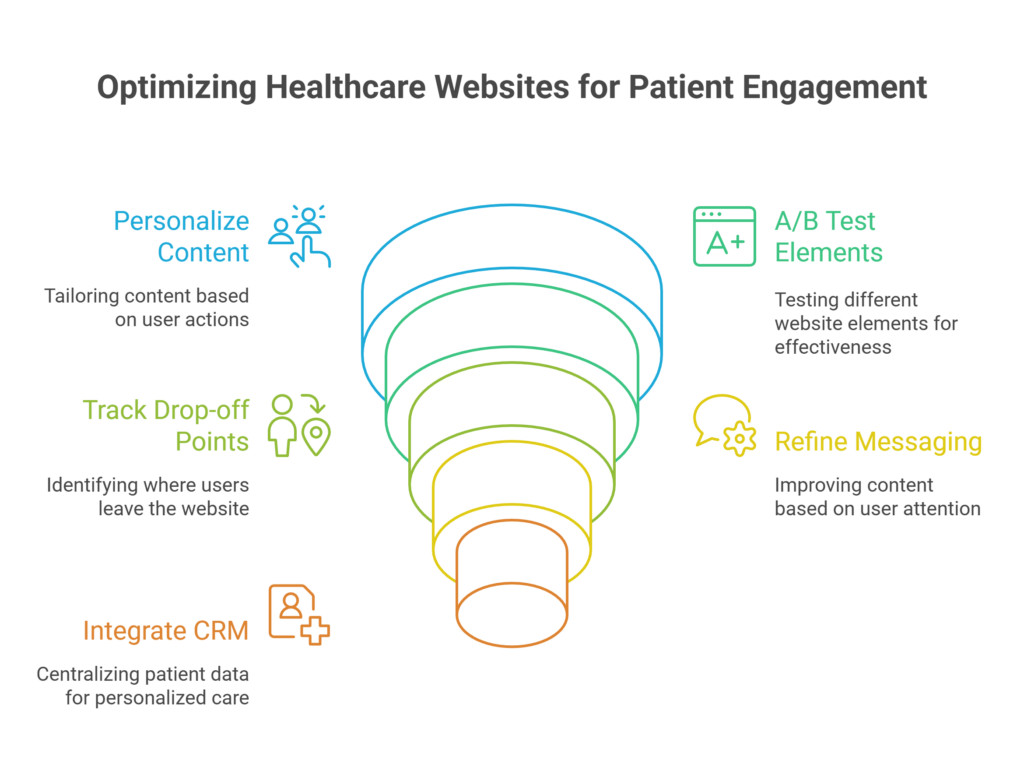
Evidence-based analysis reveals opportunities to optimize healthcare websites. User interaction analysis helps create tailored experiences that increase patient signups.
Behavior-based content personalization
Healthcare websites deliver content based on visitor actions and priorities. A study found 60% of patients select providers who understand them beyond simple data. This customization creates relevant experiences that build nurturing relationships and increases trust by 33%.
A/B testing for CTAs and page elements
Test everything that can be measured. Simple changes like button colors can boost form submissions by 25%. Healthcare organizations use A/B testing to optimize elements from headlines and images to form designs and CTAs. This gives empirical evidence to support website decisions.
Tracking drop-off points with analytics
Visitor behavior analysis shows significant friction points. High exit rates on contact pages might indicate poor form design. Frequent FAQ visits could point to unclear service descriptions. Healthcare websites use heatmaps and engagement tracking to identify where users leave.
Refining messaging based on user behavior
Scroll patterns and cursor movements show which content sections attract most attention. Healthcare providers can create precise messaging that improves engagement through targeted content strategies.
Integrating with CRM or EMR systems
Healthcare CRM works as a central hub for patient data. It tracks interactions from first contact through appointment scheduling. This integration makes communication personal, improves administrative processes, and boosts patient satisfaction through customized treatment plans.
Conclusion
Medical practices need optimized websites to succeed in today’s digital world. This article shows how smart design and good content help build trust that turns visitors into patients. Your practice’s credibility grows stronger with trust indicators like certifications, patient reviews, and detailed doctor profiles.
A smooth user experience makes healthcare websites successful. Patients can easily access mobile-friendly designs, quick-loading pages, and clear navigation. These features work with multimedia content to create platforms that patients find easy to use. The bounce rates drop and patients stay longer on such websites.
Converting visitors to patients needs a well-planned approach with multiple steps. Simple calls-to-action, useful downloads, and smart popups help guide visitors as they make decisions. Chat support gives patients quick answers right when they need them.
Information from real patient behavior helps turn good healthcare websites into great ones. Medical practices can improve their online presence through A/B testing, tracking how patients use the site, and creating tailored content. Sites that adapt based on user data perform better than those that stay the same.
Patients need to trust their healthcare providers. Your website often gives them their first look at your practice. Medical offices that use these strategies create online spaces that do more than inform – they reassure patients and guide them toward taking that vital first step in their care experience. A well-designed healthcare website starts building relationships even before patients visit your office.
Frequently Asked Questions
How can healthcare websites effectively build trust with potential patients?
Healthcare websites can build trust by displaying certifications and accreditations, featuring patient testimonials, highlighting successful outcomes, and providing detailed doctor bios with personal information. These elements help establish credibility and create emotional connections with visitors.
Why is mobile optimization important for healthcare websites?
Mobile optimization is crucial because over 60% of healthcare searches come from mobile devices. A mobile-first design ensures easier navigation, better search visibility, and higher conversion rates through simplified forms and touch-friendly interfaces.
What are some effective ways to capture leads on healthcare websites?
Effective lead capture methods include offering low-commitment calls-to-action like webinars or health guides, providing downloadable resources as lead magnets, using exit-intent popups, and implementing live chat or chatbot functionality to engage visitors.
How can healthcare websites use data to improve patient signups?
Healthcare websites can use data by implementing behavior-based content personalization, conducting A/B testing on page elements, tracking drop-off points with analytics, refining messaging based on user behavior, and integrating with CRM or EMR systems for personalized communication.
What role does user experience play in healthcare website design?
User experience is crucial in healthcare website design. A seamless experience includes fast page load times, clear navigation, intuitive layout, and the use of multimedia to explain treatments. These elements help reduce bounce rates and increase the likelihood of patient engagement and conversion.

Author: Arsh Sanwarwala
Arsh Sanwarwala is the Founder and CEO at ThrillX. He is passionate about UX/UI Design, conversion optimization, and all things digital.